RSS
RSS
 Feb 20, 2013
The original version of this article first appeared in my column “Brain Hacks for Writers” over at the online publication Futurismic. I’ve been editing and republishing each of my BHfW columns here. This is the final one, but you can read others by clicking here.
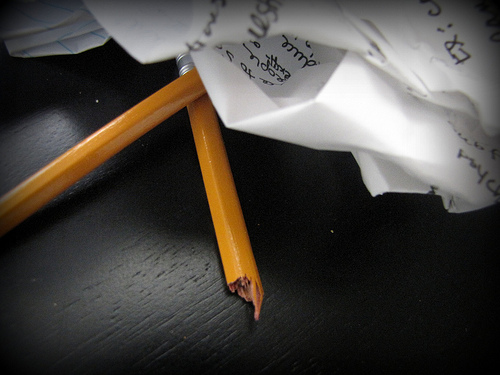
Writing a novel can be a little like a troubled romance.
Perhaps it started out with a flurry of excitement. Your idea swept you away and fascinated you–this was the one! This was the novel that was going to get finished … or be your first sale … or make a name for you. At the beginning, the characters were endearing or intriguing and the plot opened up before you like a twisty road opens up before a motorcycler on a crisp fall morning.
It’s Not You; It’s My Writing
Yet now … not so much. It’s not that you don’t still love your novel. Of course you love it! Except you also hate it. Writing it is no longer exciting: it’s work, and hard work at that. Worse, you begin to see the flaws in your original ideas and character conceptions, or you begin to worry that the whole thing is dull and unoriginal. You picture yourself plowing untold hours into the book and in the end having a manuscript that gets only contempt from agents and malignant disregard from publishers, or that you put on Amazon yourself and never sell except to your mother and her bridge partner. Ugh.
What happened? Well, of course it’s possible that you veered off the course at some point, that the scene that you thought would be so entertaining has undermined your character’s original appeal, or that you’ve resolved too many problems and now there’s no suspense, or whatever. In a way, though, it doesn’t matter whether the job is to continue writing the draft you have or to go back and rewrite part of it first: in both cases you have to actually sit down and work on the thing, and you are having all kinds of trouble forcing yourself to do that on a regular basis.
(If you never do have all kinds of trouble, of course, that’s wonderful, and this column is not written specifically for you. Congratulations, but please stop gloating.)
Passion, Not Judgment
There are two key questions here, one of which I’ll dig into and the other of which I’ll pretty much ignore.
The question I intend to ignore is whether the novel is good enough or not. That’s a topic in itself, and I’ve tackled it in a separate piece called “Your Opinion and Twenty-Five Cents: Judging Your Own Writing.”
The question I’ll dig into is this: if you’ve decided that you really do want to finish the book, how do you stop hating (or resenting, or avoiding) it?
Fortunately, the basic answer to this is simple: if you think things about the book that make you feel bad, you will have a hard time writing it. If you think things about the book that make you feel good, you’ll be likely to work harder, more often, and more energetically. You’ll also be likely to think about the project more, yielding better ideas, approaches, and insights.
For example, if I look at a novelette I’m collaborating on with a friend (yurt-living goat afficianado mom and talented writer Maya Lassiter) and think to myself “God, I am a jerk for taking so long to get those edits done,” then thinking about the novelette will consist mainly of me beating myself up for not working on the novelette, which will encourage me to avoid thinking about it so as to not feel so lousy.
If by contrast I think “I can’t wait for us to get that novelette sent out!” then I’m going to be much more excited to work on it.
Your Mental Firing Line
Is it really that simple? Yes and no. Sometimes negative thinking patterns are hard to break, and sometimes they’re extremely hard to break. (For help, see my articles on broken ideas and idea repair.) What’s more, we writers have a ridiculous number of things to worry about as we write: is it too long? Too short? Is the genre a good choice? How’s the style? Are the characters coming alive? Is it keeping the reader’s interest? Is it original enough? Is it so original that no one will know what to do with it? Are publishers buying this kind of thing right now? Are publishers even going to still be in business by the time I finish it?
If you want to finish the book, though, worry about those things only if it both helps the book and doesn’t make you want to go hide under the bed. If worrying about selling the book or about how good the book is prevents you from writing it, then assume it has a chance of being terrific and forge ahead.
Different people have different tolerance levels for this kind of thing, and the final measure is how a thought makes you feel. If you really need to get something done, then thoughts should be rounded up and forced to slave away making you happy so you can do it. Those who won’t go along with the plan of encouraging you to write your book should be lined up against the wall and shot. There will be plenty of time for their children, siblings, and friends to come after you seeking revenge later–when the book is finished.
photo by colemama
 No Comments
  brain hacks for writers, confidence, motivation, novels, passion, productivity, quality, writers, writing

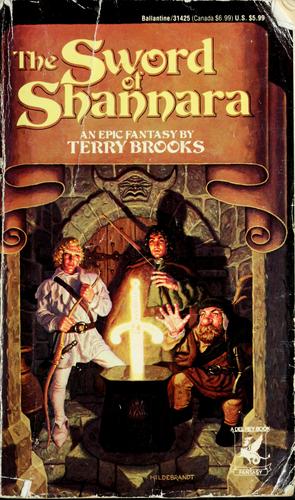 I suppose it was 20 years ago or more that I read Brooks’ Sword of Shannara. I found it to be an unrepentant rip-off of Lord of the Rings. I had no writing aspirations at the time, but after reading that disaster, I thought “Well, anyone can write a book.” And then it was a short step to “I can write a book.”
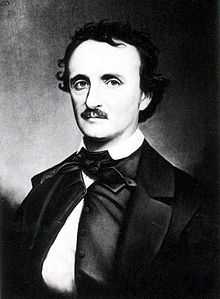 Poe. I started reading him when I was seven, while those moronic learn-to-read first-grade textbooks were being stuffed down my throat. Death from boredom…. I never wanted to learn to read–I wanted to be outside doing things. My dad tried to teach me starting at age four, and I despised it. Then elementary school almost murdered me with dreariness. Squash, crush, stifle. Man, did Poe revive me. The way he used language! By the time I was ten, I’d read all the fiction and poetry he ever wrote. I used to think the word, “poetry,” came from his name. He taught me to use words to give the world hard edges. He started me writing stories because stories gave my strapped-down childhood a shape I could control. I was a child, I wasn’t allowed to do real things, I wasn’t free, so I wrote. I still write to give the world hard edges, to be free. Poe was the first writer to save my life. I honor him.
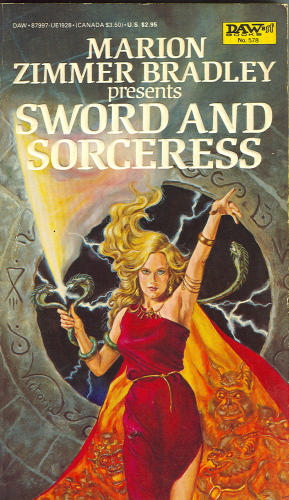 I first tried writing for publication after reading Marion Zimmer Bradley’s Sword & Sorceress series. I commented to my husband that it would be such fun to write for something like that, and he encouraged me to give it a try. S&S was invitation-only by then, and shortly thereafter MZB died and the series ended. By then, though, I’d had a story accepted by The First Line, and I was hooked.